 Product designer — Valencia, Spain / remote
Interfaces, systems, and interactive worlds — designed to feel obvious.
I'm Romina, a product & UX/UI designer who's spent years shaping B2B, SaaS, and data-heavy platforms — and now leads UX/UI and technical art direction for interactive 3D worlds at Impossible Studio. A computer-science background means I move comfortably between design, systems, and engineering — but the craft always starts with how it feels to use.
I design for how people actually feel using something.
My favorite part of the job is the moment a messy, ambiguous problem turns into something a user doesn't have to think about — a flow that just clicks, a dashboard that finally makes sense, a world that feels alive to move through.
A systems-analysis degree taught me to see the logic underneath a product before I ever touch Figma — which is an asset, not the main event. For the last five years I've worked 100% remote and async, moving between Argentina, Brazil, Dubai, and now Valencia, without losing craft or momentum.
From messy problem to interface people love.
Most of what I've designed didn't start as a clean brief — it started as a confusing workflow, a stakeholder's complaint, or a legacy tool nobody wanted to touch. This is the sequence I default to when a problem hasn't been shaped yet.
Research before pixels
I sit with users, stakeholders, and the workflow itself — through moderated testing and interviews — before I open Figma. When research isn't valued yet, I've had to pitch it: at Telecom Argentina, this meant proving ROI to an IT-driven team that initially saw testing as a waste of time.
Build the skeleton first
Paper sketches and low-fidelity wireframes let a team align on structure fast, before anyone commits to pixels. Then I build the real system: Figma variables and tokens, component libraries, and flows that hold up across desktop, tablet, and mobile.
Design for handoff
A design system only works if engineering can pick it up without asking questions. I document every decision and use AI-assisted tools — Cursor, v0, Google Stitch — to move faster without lowering the craft bar. My CS background makes this handoff genuinely frictionless.
Currently open to new opportunities
Three products, three different constraints.
Each of these started with a different bottleneck — a cultural one, a platform one, and an accessibility one. In every case, the goal was the same: make it feel obvious to use.
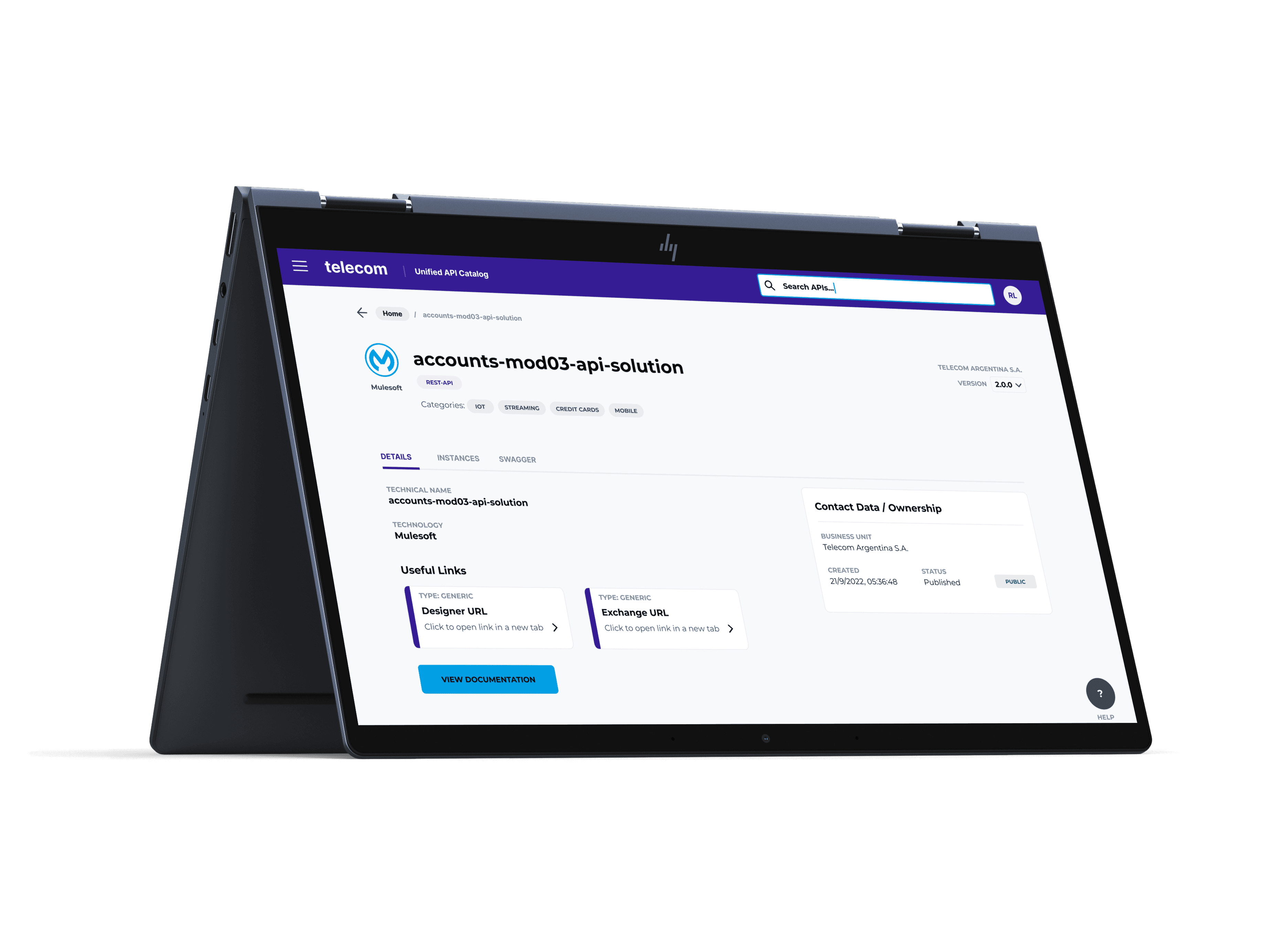
Turning API chaos into a single source of truth
Developers were hunting for APIs across scattered third-party sites. I designed a centralized, AAA-accessible portal — and had to convince an IT-driven org that UX research was worth the time first.
~62% reduction in API search time
A meeting tool that had to work inside PowerApps' limits
Built inside Microsoft PowerApps' native constraints, this tool had to hold the same task-tracking logic across desktop, iPad, and phone — including an accordion pattern that saved mobile users from nested menus.
Removed manual meeting-logging entirely
Rebuilding a parking app that failed accessibility basics
An early draft had broken WCAG compliance and real user friction. I rebuilt the UI kit on Material Design foundations and rewrote the color system so it worked for users with color vision deficiencies too.
Brought the interface up to WCAG standardsEight years, eleven teams, one throughline.
Agencies, startups, and enterprise teams across Argentina, Brazil, Dubai, and now Spain — almost all of it remote and asynchronous, most of it data-heavy B2B and SaaS work.
Leading UX/UI and technical art direction for interactive virtual worlds; designing and optimizing real-time 3D environments in Blender and Unity.
Let's talk about your product.
Open to product & UX/UI roles across game studios, product companies, and startups building complex digital experiences — remote-first, based in UTC+1 and flexible across time zones.